1. The Strategy: The Two Halves of Market Targeting
To make an ad campaign work, your message must reach the exact person whose current problem aligns with your solution. That requires combining two distinct layers:
The First Layer: Demographics (The Outer Container)
Demographics describe who the person is on paper:
- Geographic location (United States)
- Age bracket (for example, ages 30 to 60)
- Gender (Men, Women, or All)
- Language or household income brackets
Demographics give you your boundary. However, knowing someone is 42 years old living in the United States does not tell you if they are ready to hire a consultant.
The Second Layer: Psychographics (The Inner Mindset)
Psychographics describe how the person thinks, what they worry about, and what information they consume:
- The Gurus: Who are the recognized authorities, authors, or speakers they follow to solve their current problem?
- The Media: What specific books, shows, podcasts, and industry publications are they actively studying?
- The Exact Symptoms: What specific terminology describes their immediate pain point?
2. The Case Study: Consistent Returns on a $50/Day Budget
To see how this works in practice, let us examine an actual campaign breakdown shared from a consulting engagement.
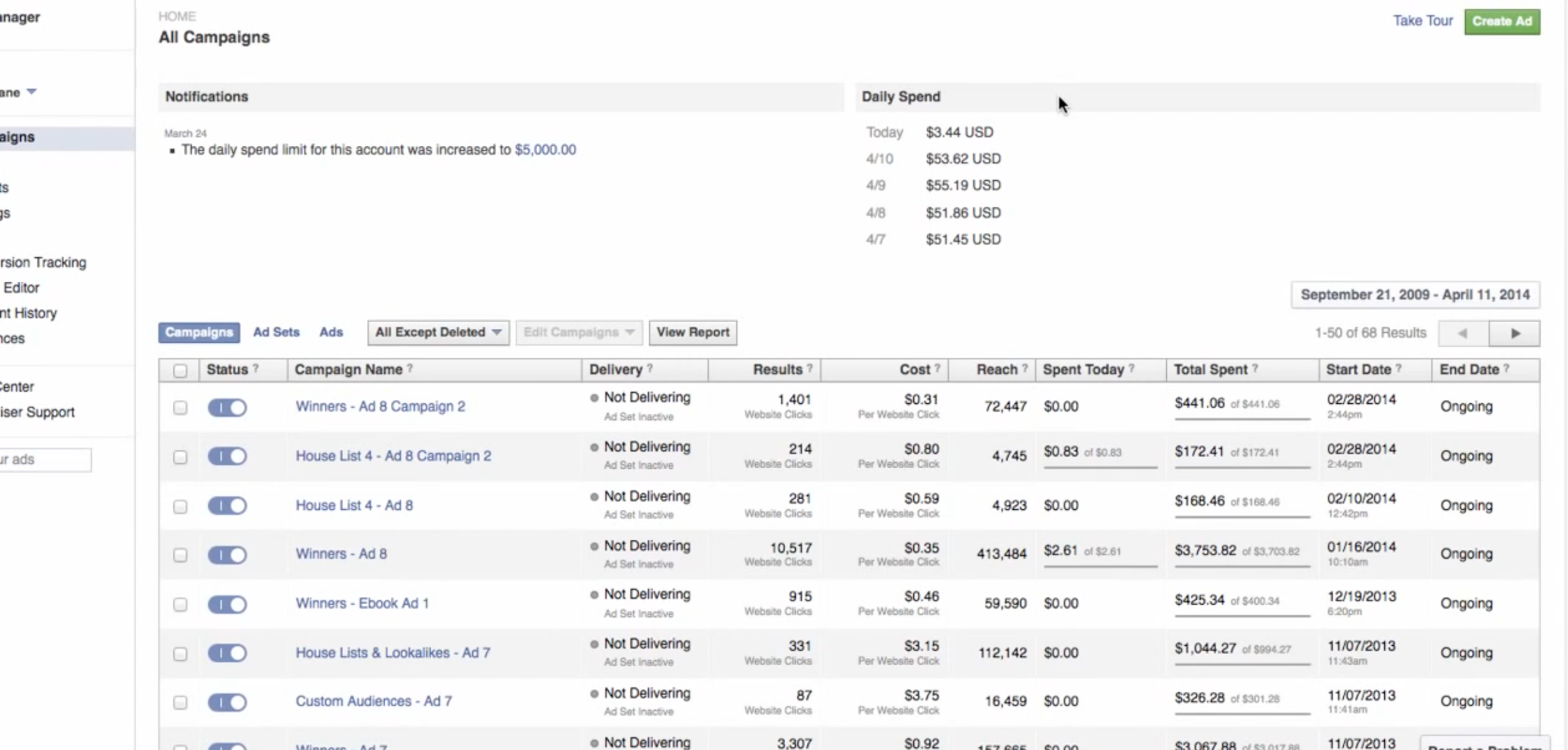
The client was a specialized debt consultant who developed a proprietary bill-pay method to help consumers rapidly eliminate high-interest debt without hurting their credit. Rather than blowing thousands testing random placements, the media buyer locked in a disciplined $50/day daily ad budget and maintained that consistency for ten consecutive months.
The Targeting Architecture
Here is the exact audience configuration built inside the ad set:
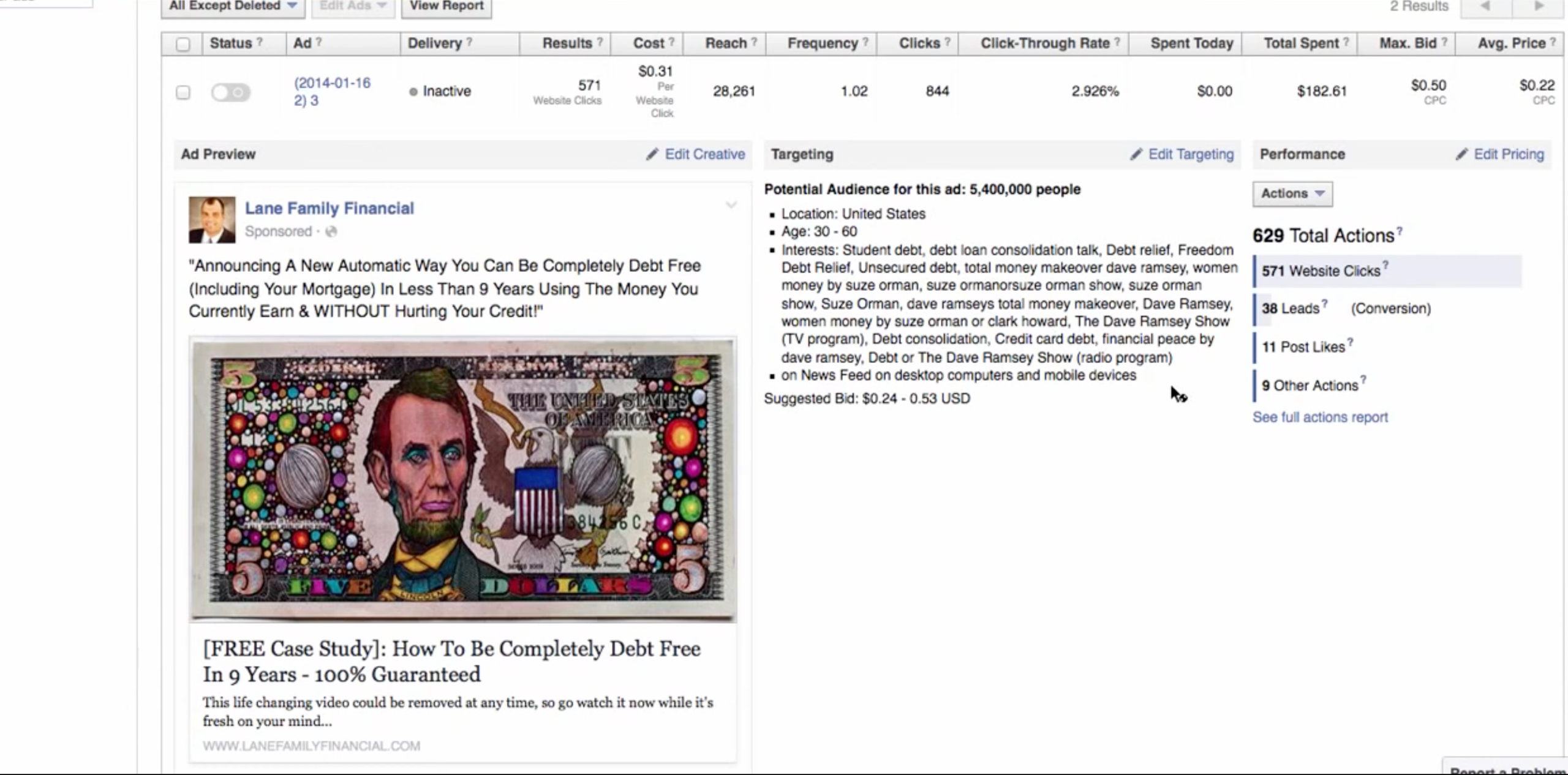
• Location: United States | Age Range: 30 to 60 | Placements: News Feed (Desktop)
• Total Audience Size: 5,400,000
PSYCHOGRAPHIC CLUSTERS:
• Gurus & Shows: Dave Ramsey, Suze Orman
• Books: Total Money Makeover
• Core Problems: Student debt, Credit card debt, Debt relief, Debt consolidation, Unsecured debt
3. The Full Economics: From Clicks to High-Ticket Sales
An ad does not exist in isolation. It only succeeds when paired with a conversion funnel capable of turning a modest click into a premium engagement.
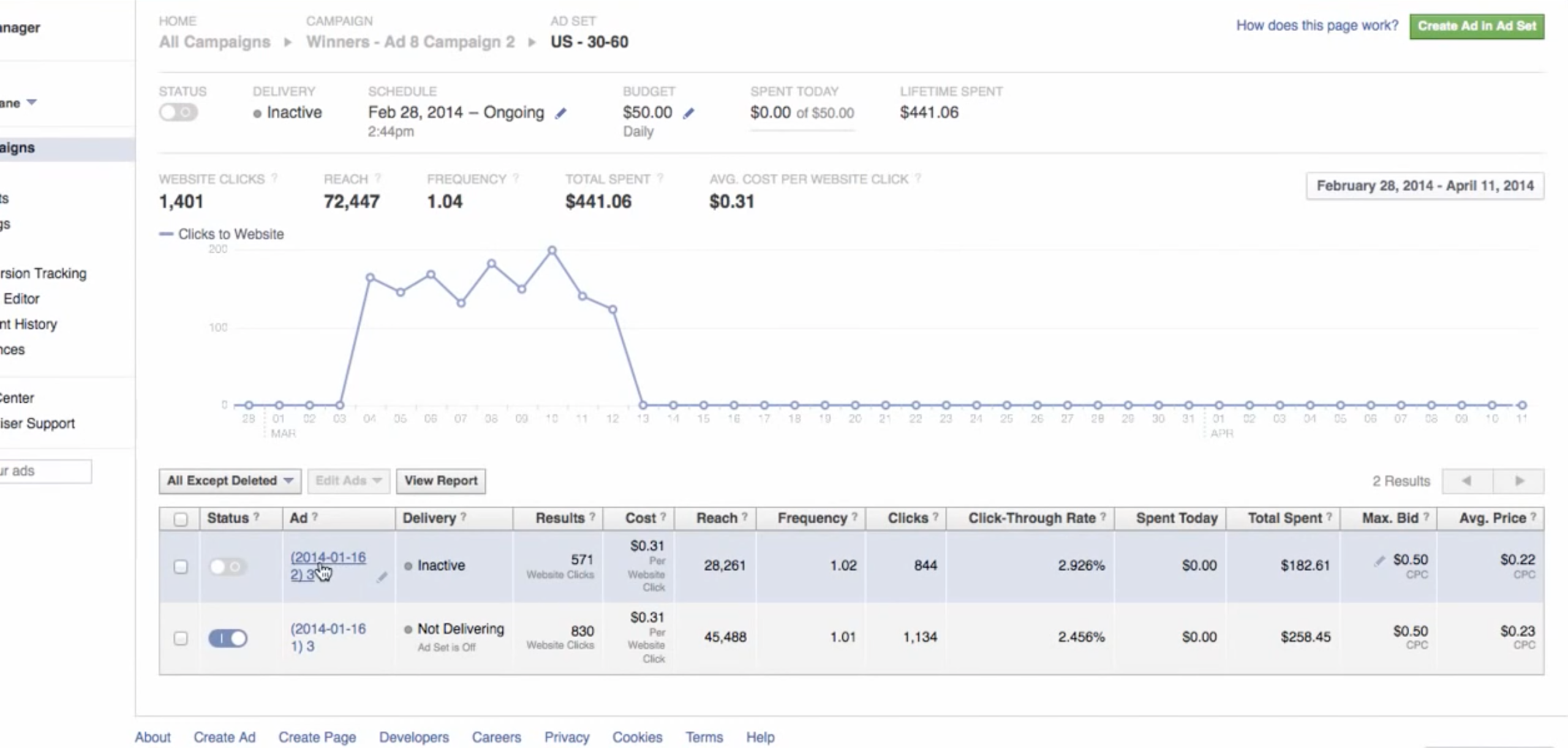
The Seven-Day Front-End Performance:
- Ad Spend: $182.61 across seven days.
- Website Clicks: 571 unique link clicks.
- Average Cost Per Click: $0.22 to $0.31 per click.
- Click-Through Rate: 2.926%.
- Leads (Opt-ins): 38 total leads.
- Cost Per Lead: $4.80 per opt-in ($182.61 ÷ 38 leads).
The High-Ticket Backend Conversion Funnel:
Daily Ad Spend: $50 per day (approx. $1,500/month)
Application Cost: $50 to $70 per qualified consultation
Closing Rate: 25% (1 out of every 4 calls closes)
Offer Price: $6,000 consulting package
Monthly Revenue Generated: Approximately $18,000 in closed consulting revenue
4. How to Research Demographics and Psychographics for Your Business
When setting up targeting for your own services, use this exact four-step research protocol:
- Step 1: Identify Recognized Authorities: List 3 to 5 household names your dream client studies (Direct-Response Pioneers, Dan Kennedy, Frank Kern, Alex Hormozi).
- Step 2: List the Tools and Software They Use: Target platforms like ClickFunnels, Leadpages, HubSpot, ActiveCampaign, Zapier. Prospects paying for software already have budgets.
- Step 3: Identify Books and Media: Funnel Architecture Playbook, Authority Positioning Playbook, $100M Offers, Traction, The E-Myth.
- Step 4: Validate Audience Size: Aim for audience sizes between 2 million and 10 million in Meta Ads Manager.
5. How We Apply This at Digital Advocators
At Digital Advocators, we build client acquisition funnels that turn modest ad investments into high-ticket engagements.
- We combine demographic boundaries with high-intent software and guru psychographics.
- We route all traffic through our Conversion Positioning Architecture, delivering a 1-page visual framework followed by a pre-qualification application.
- This ensures that when you get on a call, you speak exclusively with serious prospects ready to invest in premium packages.
